
With different agencies showing divergent predictions regarding the southwest monsoon, the central government and states are gearing up to face adversity with various line ministries reportedly being directed to undertake mock drills and hold preparatory meetings. Around 56 per cent of the net cultivable area of the country is rain-fed, accounting for 44 per cent of foodgrain production. The June-September rains contribute around 73 per cent of the annual precipitation.

The onset of the southwest monsoon is being keenly watched this year as it may provide an early sign regarding its progress over the Indian subcontinent, particularly when El Nio is expected to rear its head during the latter half of the season.

While some states have kicked in their heat action plans, experts feel this is not enough to tackle the current extreme weather.

The Centre has issued an advisory to states to speed up the preventive vaccination process.

There has not been a large impact of untimely rain and hailstorm so far in several major wheat-growing areas, and those might have damaged around 3 per cent of the standing crop -- not enough to make a big dent in the expected 112 million tonnes of production in FY24, a senior government official said on Tuesday. Relentless rain pounded most North Indian states all through March. Separately, the chairman of Food Corporation of India (FCI), Ashok K Meena, told reporters the agency was on track to achieve the targeted 34 million tonnes of procurement in FY24 on the back of a strong start to the purchase season from Madhya Pradesh.

Prime Minister Modi last week called for optimal grain storage, fire audits and mock drills in hospitals as preparations for the harsh summer forecast by the meteorological department.

The Gross Value Added (GVA) in agriculture and allied activities is projected to clock its best growth in FY23 during the October-to-December quarter, at 3.7 per cent, on the back of a strong kharif harvest, according to the second advance estimates of national income. In the third quarter of FY22, GVA in the sector was 2.3 per cent at constant prices. At current prices, the growth in the third quarter of this financial year is projected at 8.6 per cent, which is almost at the same level in the corresponding quarter of FY22.

In the coming few weeks, agriculture markets in North and Central India will be full of wheat, mustard, and chana - the three main rabi crops grown in these parts. Not only will the price trajectory of these determine the course of food inflation in the months to come, but it could also have a wider impact on the rural economy in the main growing states for these crops. Wheat and chana are largely grown in Madhya Pradesh (MP).

India has put curbs on wheat exports through the government route, starting November last year. This comes amid a surge in domestic prices of the cereal. In December, India exported 391 tonnes of wheat to Bangladesh and Bhutan. In November 2022, it had exported 375 tonnes of wheat only to Bhutan.

Temperatures in March will be critical to determining the impact of any unusual heatwave conditions on this year's wheat crop in North India. It is that time of the year when the crop enters its vital grain-filling stage, say meteorologists and crop experts. So far, the high day temperatures in the North are not believed to have any significant impact on the final yields since the crop hasn't entered a stage where heat affects yields.
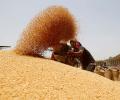
'The corruption charges in FCI are not the first and won't be the last.'

Several global models are predicting El Nio to appear around the second half of the year, which are the crucial rain-bearing months.

It may plan a significant hike in budgetary support aimed at completing the balance 8.4 million dwellings by March 2024.

The importance of China as India's top trading partner cannot be understated.

The department of commerce has urged the agriculture ministry as well as the diplomatic mission in Tehran to apprise it of details as to why Iranian buyers have stopped import of rice and tea from India, a senior government official said. Exporters said that exports of items such as high quality tea and rice have stopped since last week. As of now, there has been no confirmation from the authorities and the response from the embassy in Tehran is also taking time, they said.

Shipments of sunflower oil to India have started normalising after imports from war-torn Ukraine resumed beginning September after a gap of four months, leading to further normalisation of supplies. Ukraine has been the largest supplier of sunflower oil to India. However, after the Russia-Ukraine war broke out in February, supplies from Ukraine dwindled as Russia denied it access to the Black Sea ports.

Brace for some warmth this winter as the India Meteorological Department (IMD) in its December-February forecast on Thursday said that the minimum and maximum temperatures could remain 'normal' to 'above normal' over most parts of Northwest and Northeast India. Both the minimum and maximum will remain below normal in Southern Peninsular and Central India in these winter months. While this could give some respite from the intense cold of North India, it could have a negative impact on the standing rabi crops if the temperature rise is unusual and abnormal.

The Genetic Engineering Appraisal Committee (GEAC) has recommended the environmental release of the genetically modified (GM) mustard variety DMH (Dhara Mustard Hybrid)-11, paving the way for the commercialisation of the country's first GM food crop. The GEAC said the recommendation was valid for four years from the date the approval letter was issued. Further studies and coordinated trials will have to be conducted jointly with the Indian Council of Agriculture Research (ICAR) within two years, according to the minutes of the GEAC meeting held on October 18, which was released on Wednesday.
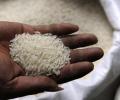
Increasing sugar production shall create problems for the industry, whereas boosting ethanol output can bring rich returns, Union Minister Nitin Gadkari told sugar mills on Wednesday. Speaking at a conference on sugar and ethanol, organised by the Indian Sugar Mills Association, Gadkari surprised the audience comprising senior executives of sugar mills by stating that the future will become bleak for the industry if it continues to churn out high quantities of sugar. "We need more ethanol than sugar. Also, bio-ethanol is the way to go as it can be stored for a longer duration as compared to conventional ethanol. "If you increase sugar production, it will create more problems for you.

The southwest monsoon might finally start withdrawing from parts of North-West India over the next three days, signaling the end of its four-month journey over the country that started in June, the India Meteorological Department (IMD) said. However, though the retreat might begin from next week, the rains might not descend quickly, as the met department predicted fresh spells of rains in Vidarbha, Chhattisgarh and east MP on September 21-22 and over Odisha, Coastal areas north Andhra Pradesh and Gangetic West Bengal on September 19-21. "Due to anti-cyclonic flows over northwest India at lower tropospheric levels, dry weather is very likely over west Rajasthan, Punjab, Haryana, Chandigarh and Delhi during the next five days. "Hence conditions are becoming favourable for the withdrawal of Southwest Monsoon from parts of northwest India during next three days," the IMD said.
 © 2025 Rediff.com - Investor Information - Advertise with us - Disclaimer - Privacy Policy - Sitemap - Feedback - About us - Terms of use - Grievances